Welcome to WordPress. This is your first post. Edit or delete it, then start writing!


If you are in the service area for Long Beach Animal Care Services, yes, our public shelter can help you in many ways!
One of the most important types of services they provide is the treatment of sick and injured community cats discussed elsewhere on this site. There are also partner organizations that do low cost vaccines at the shelter on a weekly basis, which is a huge help for folks wanting to help friendly community cats and kittens get off the streets.
Please visit the website for more information!

Ear-tipping is the removal of a small portion of one ear — usually the left ear, but not always — while the cat is under anesthesia for spay or neuter surgery. It is the universally accepted way to signify that a community cat has been spayed or neutered.
This is a clear visual sign that a cat is altered and vaccinated, visible from a distance, to prevent re-trapping, saving cats from the stress, cost, and risk of repeated trapping and anesthesia for unnecessary surgery.
Changing Attitudes
Some people don’t like the idea of ear tipping, and they may want to opt to avoid it if they think that cat may be adoptable and worry that it will hurt the kitty’s chances of being welcomed as a pet. However, for unowned cats, there should not be any qualms about this practice. It should be seen as a sign that someone cared enough about the cat to get it fixed and vaccinated and is caring for its well-being.
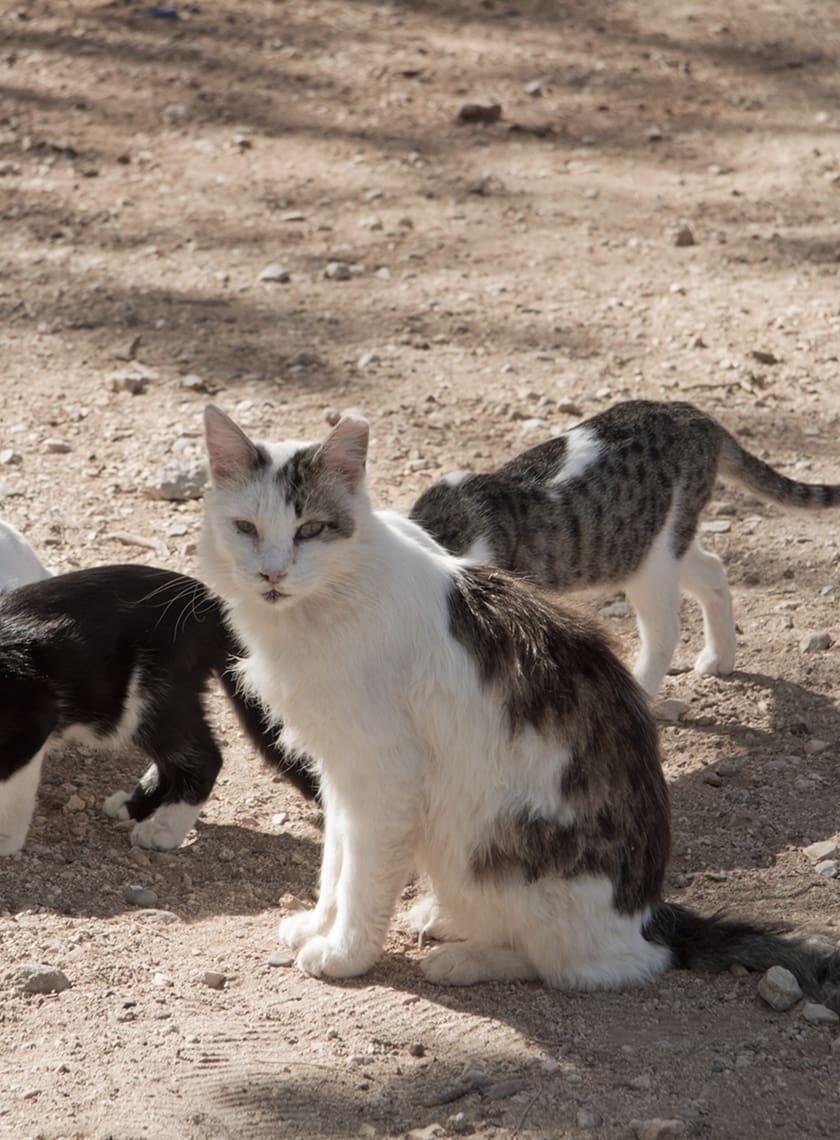
This question of “What Should I Do” with the cats or kittens you find is always a difficult one. People like you with a soft spot for animals tend to want to “save” or rescue the animals they find. This is typical, and in many cases it may make sense and be worth doing. We include some guidelines below.
Having said that, currently, in the Southern California and greater Los Angeles area, it is an impossible feat to rescue and find homes for the estimated 1 to 3 million unowned cats. The number one way to reduce this number and help get closer to a number of kitties that can look forward to having forever homes and families is TNVR. We simply must stop the breeding of more unwanted animals.
Age? Kittens, especially those under 2 months old, are definitely worth trying to save and find homes for. Even if they act scared and “hissy,” they usually come around quickly with food, care, and human affection. They will need to be treated for fleas, vaccinated, and spayed/neutered between 3-5 months.
Temperament? As the kittens get older, they tend to act more “feral” or wild and become harder to domesticate. All cats, even fully grown adult cats have distinct personalities, though, so it will really depend on the temperament of the cat. Friendly kitties are easier to handle and interact with and will therefore be easier to get vetted and integrated into a home.
Truly Stray? Lastly, even though that cat you found is not fixed and coming to your house to eat, you should make a good faith effort to talk to neighbors and make sure it doesn’t belong to someone else. If a neighbor does claim him or her, share with them information about low cost spay/neuter, and do your best to make sure kitty gets fixed.
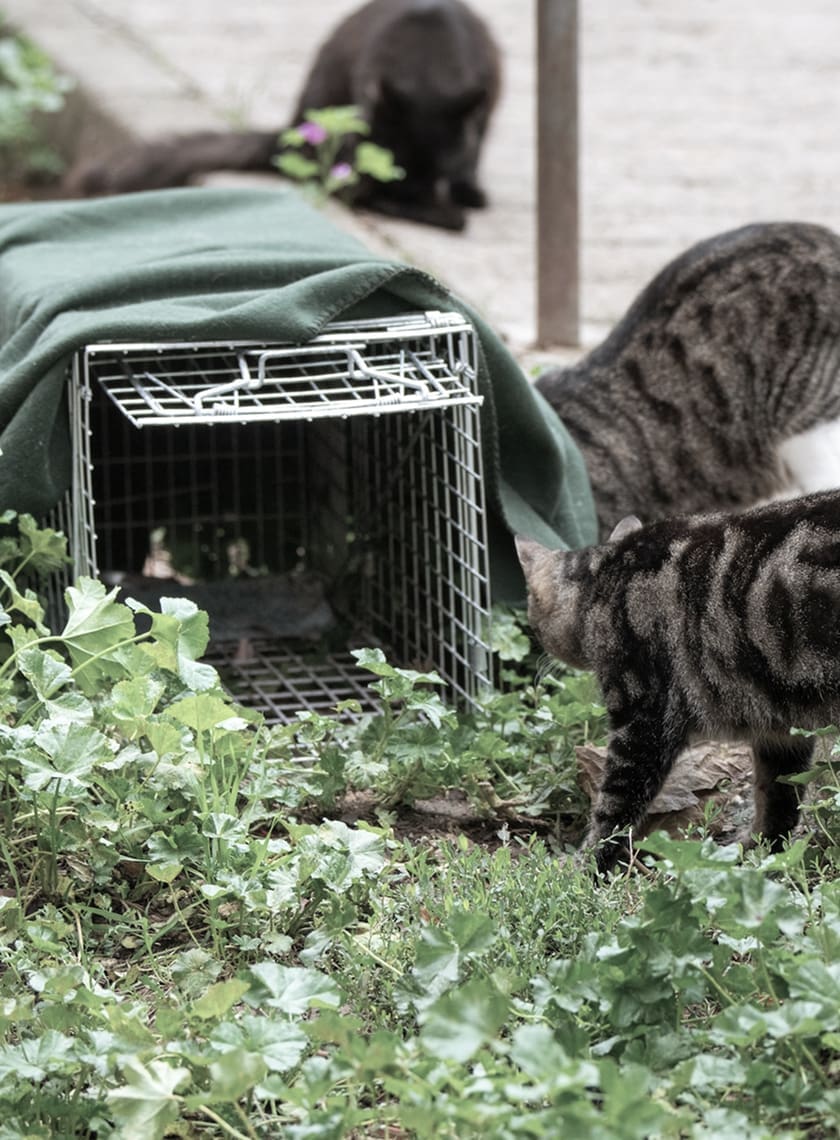
Humane trapping, or the T in TNVR, is the game changer for us who do this work. Everything revolves around being able to safely secure the cat so that she or he can be transported to and from a clinic to be spayed or neutered. When you are new to it, it can deem daunting and intimidating, but like most things, it gets easier with practice and experience.
You will never again have to worry about trying to get a feral or scared cat into a carrier or wonder how you will be able to help that cat in need. Humane traps are the answer. There are many kinds, but they all have a few things in common:
• sturdy, metal wire all around with a handle on top
• at least one “door” that closes when triggered
• a trip plate that will get activated to close the “door” when the cat steps on it on the way to the food
• an open wire bottom that should be covered with newspaper to protect kitty’s paws and claws and absorb any urine or feces or spilled food
There are a lot of do’s and don’t do’s, and every one of them is for the safety of the kitty or you, or both. These are a few of the most important ones:
• Never leave set traps unattended
• Once a cat is trapped inside, always cover completely with a large towel or small blanket
• Always put something under the trap such as cardboard, layers or newspaper or potty pads to catch waste and protect floor or car during transport
• Never transport in the open back of a truck.
• Cats in traps should be kept in quiet, safe, and temperature controlled locations and should not be held for more than 12-15 hours before and after surgery.
Please watch this excellent video done by The Kitten Lady, Hannah Shaw, that will introduce you to TNVR and explain almost everything you need to know before getting started. She will review best traps to use and best practices. There’s a lot, but this great video covers it in clear, amusing, and easy to understand steps.

Community Cats may be a new term for you! Some people use the word “feral” to describe what we now call community cats. Community Cats are not owned by a person or household as a pet, but rather belong to and live in the community.
If they are lucky, members of the community take responsibility for them and feed them. Real responsibility, however, includes making sure they get spayed or neutered, so that they do not produce more unwanted kittens to grow up without homes and vaccinating them so they do not get sick and spread diseases.
Some community cats are friendly, and end up being adopted by caring folks. This is a great outcome, and should always be a goal. However, many community cats are not friendly and do not want to socialize with humans. We call this temperament “feral” or wild or not able to be handled. For them, TNVR — Trap, Neuter, Vaccinate, Return — is the best answer. Cats that are sterilized (spayed or neutered), lose the drive to mate, fight, spray, and roam, leading to an all-around better life for them. Vaccination is included to make sure they stay healthy and not spread communicable diseases to other cats in the neighborhood or colony.
Once they go through TNVR, cats will be ear tipped and returned to the exact neighborhood location they came from to live out their lives. They are often bonded with other cats in the neighborhood or colony, and should never be relocated except in dire situations.
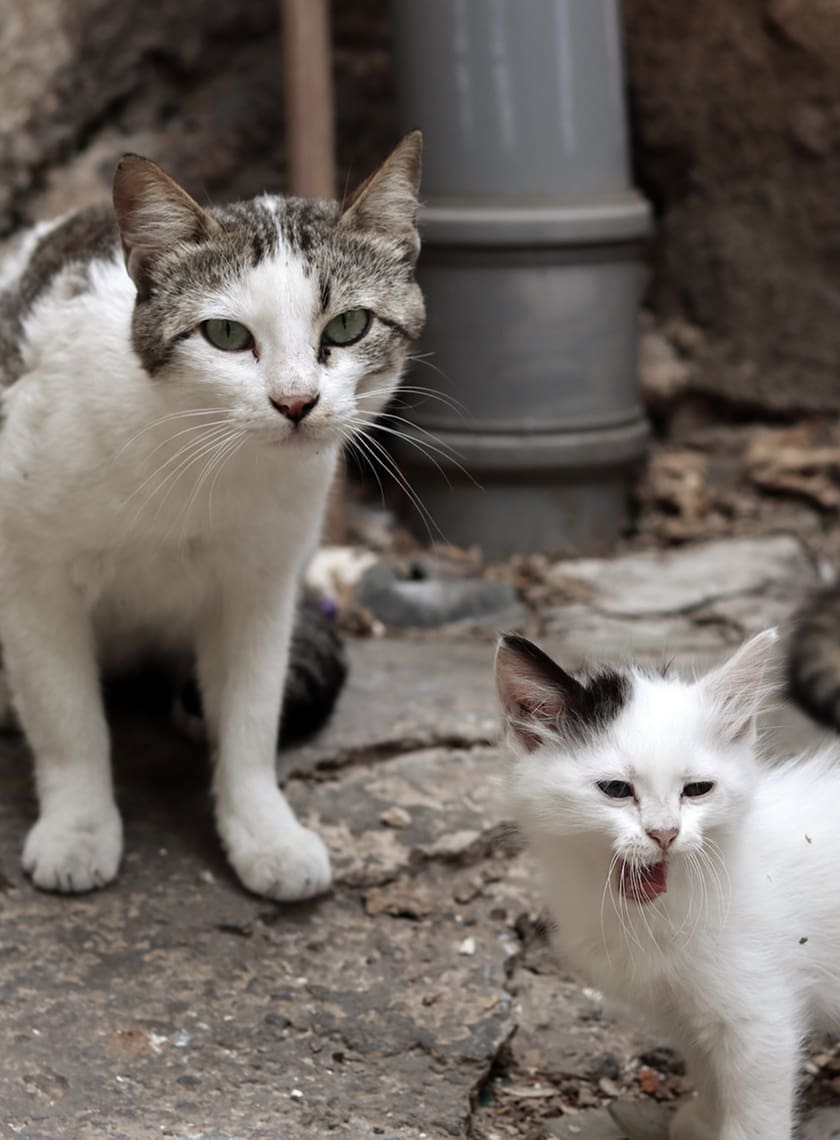
Age and Condition will help determine the best course of action for the cat(s) you found!
For kittens, age is critical. Under 5-6 weeks they cannot survive very well on their own. They rely on the mom cat for food and warmth. From 6-8 weeks they are weaning and learning how to be more independent. Kittens under 8 weeks should be kept with mom cat if at all possible.
See the Kitten Chart for clues about the age of the kitten you found!
Are there others? Is mom cat around? Is mom friendly? These are the next questions you will need to get answers to before reaching out for help.
It is best to locate all the kittens in the litter. Often, around the age of 4-5 weeks, kittens will start exploring. This may explain why a mystery kitten just showed up out of the blue. Resist the urge to scoop up just the one, but rather see if you can locate the others and most importantly, see if the mom is around and still caring for them. Mom is the best equipped to take care of the kittens, especially if they are under 4 weeks old. Set up a shelter with food and water and see if you can earn their trust, with the goal of getting the mom spayed and the kittens socialized and adopted, if feasible.
Important: Do not separate kittens under 4 weeks old from the mom cat. This will trigger her to go into heat and get pregnant again; plus very young kittens have a high mortality rate without their mom. The best way to help the little family is to provide food and shelter for mom and wait for the kittens to gain independence. Then, TNVR mom and see if you can network the kittens into rescue.
If mom is friendly, you can set up a crate or portable catio or spare bathroom and keep them safe and cared for until the kittens are old enough to be separated and then spay mama and get the kittens vetted and adopted out. It’s not always possible to rescue and adopt out, but it’s a great goal.
What is the condition of the cat or kitten? Does it look healthy? Full body, nice fur, and bright eyes? It may be a neighbor’s cat! Be sure to talk to your neighbor’s and ask around before taking too many steps. For older kittens and cats who look to be in need of help, there will be lots of help here for you, but it’s best to assume there is no Rescue available to just take the cat/kittens. We will help break down the best path for you to take to help the cat or kittens you found live their best lives.
If you live in the Long Beach Animal Care Services area, and the cat or kitten you found is SICK or INJURED, you can take the animal to the facility to be treated. If you can, please secure the animal in a trap or carrier. It is best to contact LBACS before heading over there, if possible. If you are unable to take the animal, you can call for a pick up, but wait times may be long, so do what you can to help the animal get the care it needs.
If the kitty you found is a community cat (not owned) and in healthy condition but not particularly friendly, the best thing to do is probably TNVR. We can help!
Hi, this is a comment.
To get started with moderating, editing, and deleting comments, please visit the Comments screen in the dashboard.
Commenter avatars come from Gravatar.